Water Heater Installation & Replacement
Swap a dead tank for a new one and choose capacity, fuel type, venting and placement.
A tankless unit heats water as it flows, so it never runs out, but it lives or dies by scale, venting and a clean intake. Service keeps it efficient and prevents error codes.
Call and give the make, the error code and what the water is doing.
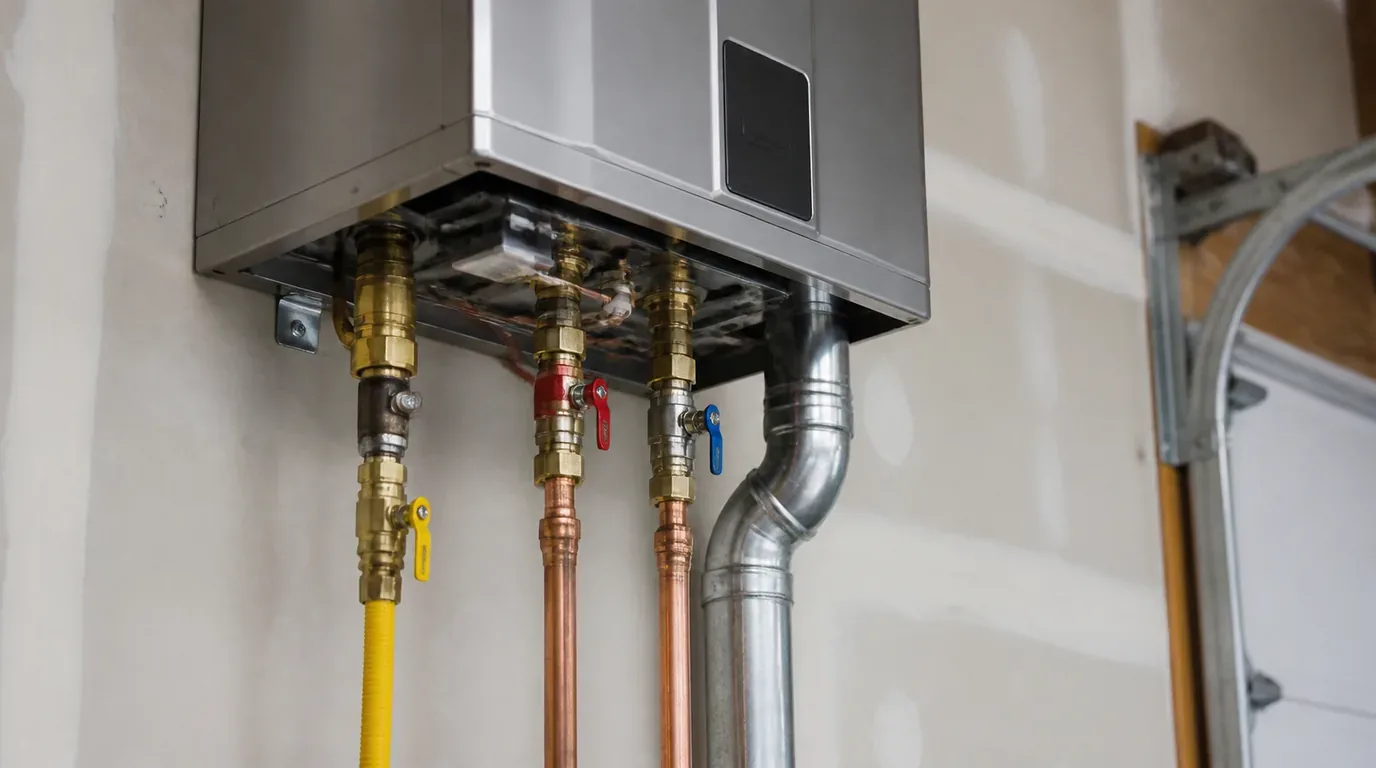
Heat causes minerals to leave the water and coat the heat exchanger. The coating insulates the metal, so the unit works harder and heats less. In time it can overheat and fail.
Westminster's water has moderate hardness, around 7 to 8 grains per gallon in the city's 2022 report. Many manufacturers call for periodic descaling in water like that. A softener reduces the problem.
The plumber isolates the unit, circulates a descaling solution through the heat exchanger, rinses it and cleans the inlet filter. The visit also checks the venting, the gas pressure and the combustion.
Ask for the error history if the unit has a display. It shows whether a fault is a one-time glitch or a pattern.
High altitude affects combustion. A tankless unit that is not set up for elevation may run rough, throw error codes or fail early.
Mineral content plus gas combustion is a hard combination. A yearly descale, or a softener upstream, keeps the unit running as intended.
Flushing out scale is routine, while repairs differ by model. Weigh these points.
Ask whether service valves are installed and whether the visit includes a combustion check.
Typical repairs include replacing a flow sensor, a thermistor, a fan, an igniter or a condensate trap. Condensing units produce acidic condensate, which must drain properly or be neutralized.
A unit that short-cycles may be sized too small or may be starved of gas. Check the gas line size before blaming the heater.
A tankless install often needs a larger gas line, new venting and a power connection. The vent must be approved for the model and for the altitude, which in this area is above 5,000 feet.
Westminster lists tankless water heaters among installations that need a permit. Confirm that the contractor pulls it and that the final inspection is scheduled.
These steps keep a tankless unit running well.
Swap a dead tank for a new one and choose capacity, fuel type, venting and placement.
Put in a new softener or bring a stalled one back to regenerating on schedule.
Track down the cause of cold showers, tank leaks, popping noises, pilot trouble or burned-out elements.
Manufacturers often suggest once a year in hard water. Check the manual for your model and your water conditions.
Codes point to ignition, venting, flow or temperature faults. The code in the manual is a starting point, not the diagnosis.
Not required, but a softener reduces scale and extends the life of the heat exchanger in hard water.
It can if demand exceeds its flow capacity. Running two showers and a dishwasher together can strain a small unit.
Call whenever the problem starts. Shut off a dripping or gas-scented unit before you dial. The arrival window is set by the contractor.
Call and give the make and error code. A contractor can say whether it needs a flush, a part or a closer look.
Service area centered on Westminster and the nearby Denver north-metro cities.