Water Line Repair & Replacement
Fix or replace the buried supply pipe running from the meter to your foundation.
Your meter reads high, a basement corner smells damp, or the city sent a leak alert. Detection work finds the pipe that is losing water so the repair stays small. Water already moving through a wall or ceiling? Ring the all-hours line now and skip the wait for office hours.
Phone in, tell the dispatcher what the meter and the damp room are doing, and a nearby contractor gets arranged.
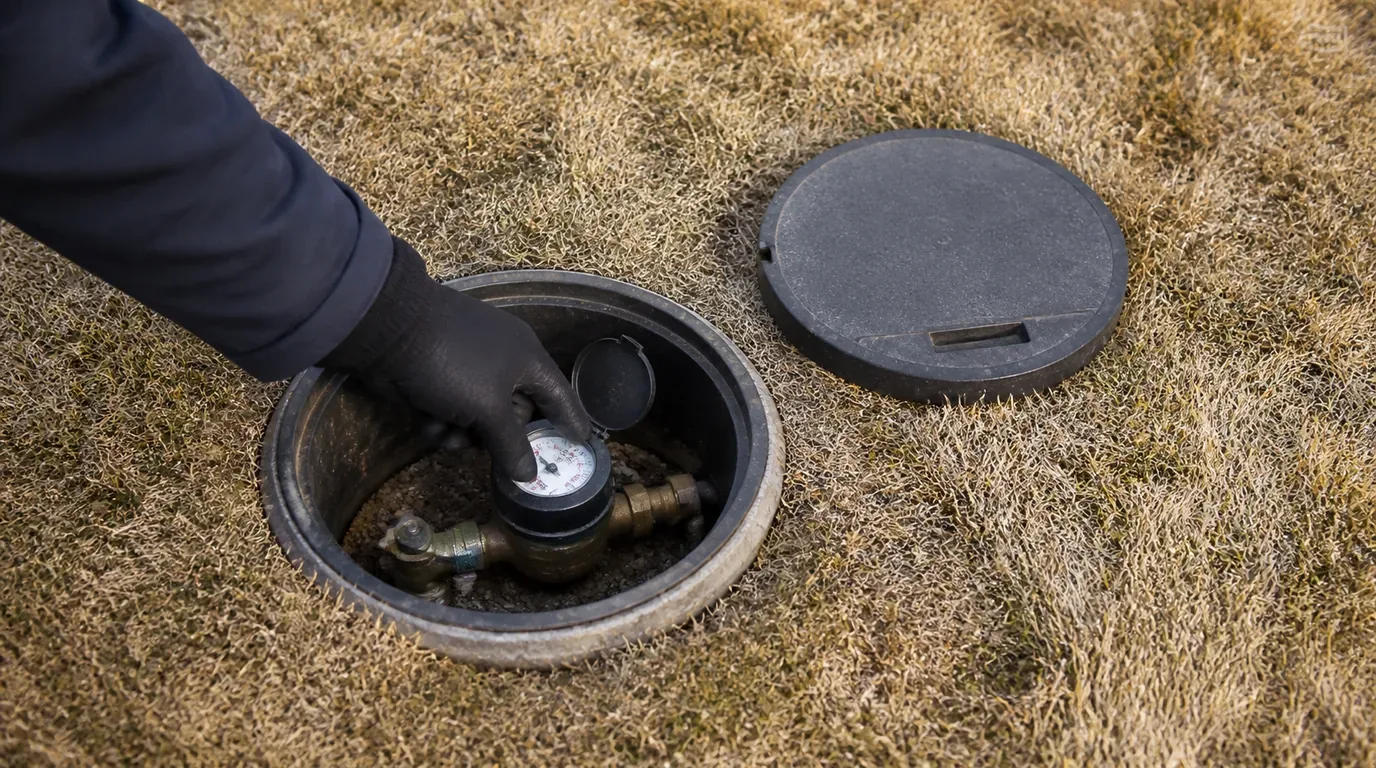
Turn off each faucet, the ice maker and the irrigation controller. Then look at the meter register. If the leak indicator keeps moving, water is leaving the house or the yard somewhere.
Toilets cause most quiet leaks. Drop a dye tablet or a few drops of food coloring into the tank and wait ten minutes without flushing. Color in the bowl means the flapper is letting water through.
If the meter sits still, the leak may only open under pressure or on a timer. Sprinkler zones and a stuck fill valve both behave that way.
A good search works in stages. The contractor closes the main valve and watches whether the house holds pressure, then closes branches one at a time. The section that loses pressure is the one to open.
From there the tools match the pipe. Acoustic listening gear picks up escaping water on metal lines. A thermal camera shows a cool or warm patch behind drywall. Pressure testing a buried line shows whether it holds at all.
The aim is a marked spot on the floor, wall or lawn. That keeps the opening to a patch instead of a demolition.
Westminster sends a possible leak alert when a meter has registered continuous use for 24 hours. If nothing in the house runs that long, treat the alert as a real clue.
After a repair, the Westy Water customer portal shows hourly use, which confirms the leak actually stopped. The city also describes a leak credit on bills, with conditions, so ask the utility about it before you throw away the invoices.
Finding the leak is billed on its own, by hours and method, and the repair gets a separate quote. Several things shift the figure.
Ask whether the detection charge is credited toward the repair when the same contractor does the work. Policies vary, so settle the question before work begins.
Many Westminster homes have finished basements, so a supply line can run above a drywall ceiling for years before a stain shows. Crawlspaces hide fittings near the rim joist. In the yard, the usual suspects are the sprinkler system and the private section of line between the meter pit and the house.
The city owns the pipe from its main to the meter pit. The owner is responsible for the pipe from the meter into the building, so a leak on that stretch is yours to fix.
The contractor should tell you where it is, what failed and what the repair involves. A bad shutoff valve is a short job. A pinholed copper run behind a finished ceiling is bigger and may point to repiping.
Ask whether the quote covers the opening and the patch or only the pipe. Drywall, tile and paint are usually separate trades. If water has soaked the structure, drying is its own job, covered under water damage restoration.
None of these needs tools, and each one saves the contractor time.
Not every wet spot is a supply leak. A drain leaks only while water runs through it, so a stain that grows after a shower or a washer cycle points to a drain. A stain that keeps spreading through the day usually comes from a pressurized pipe.
Cold pipes in a humid basement can also sweat in summer and drip onto a floor. That is condensation, and insulation sleeves fix it. A meter test separates the two, because condensation never moves the dial.
Fix or replace the buried supply pipe running from the meter to your foundation.
Thaw an iced-up line safely, inspect it for splits and reroute or insulate the run that keeps freezing.
Dry and rebuild a home after a pipe leak, a frozen-pipe burst or a sewer backup.
Check the meter with everything off. A moving indicator means water is flowing. Other clues are a sudden usage jump, a musty smell, a warm floor patch and the sound of water when no one is using any.
Often yes. Isolation, listening gear and thermal imaging narrow a leak to a small area, and only that spot is opened. Leaks that appear only under pressure take longer to pin down.
Westminster describes a leak credit that applies once per calendar year when usage runs well above your normal average and the leak has been repaired. Apply within the window the city sets, and confirm the current terms with the utility.
Some homeowner policies cover access and detection after a sudden leak, and many exclude worn pipe. Read the policy and call your insurer before work begins.
Someone picks up every hour of the night. Explain where the water appears and whether the meter dial is spinning, and the dispatcher finds a nearby contractor. If you can reach the main shutoff, turn it before you call, and ask what time to expect a visit.
Close the main if it is within reach, then phone. Describe what the meter and the room are doing, and the dispatcher walks you through what happens next.
Service area centered on Westminster and the nearby Denver north-metro cities.