Leak Detection
Trace a hidden leak behind a wall, under a slab or along the buried line before any wall has to be opened.
A backflow assembly sits between your sprinkler system and the drinking water. It must work, and in Westminster it must be tested on a schedule and reported to the city.
Call and say what type of assembly you have and when it was last tested.
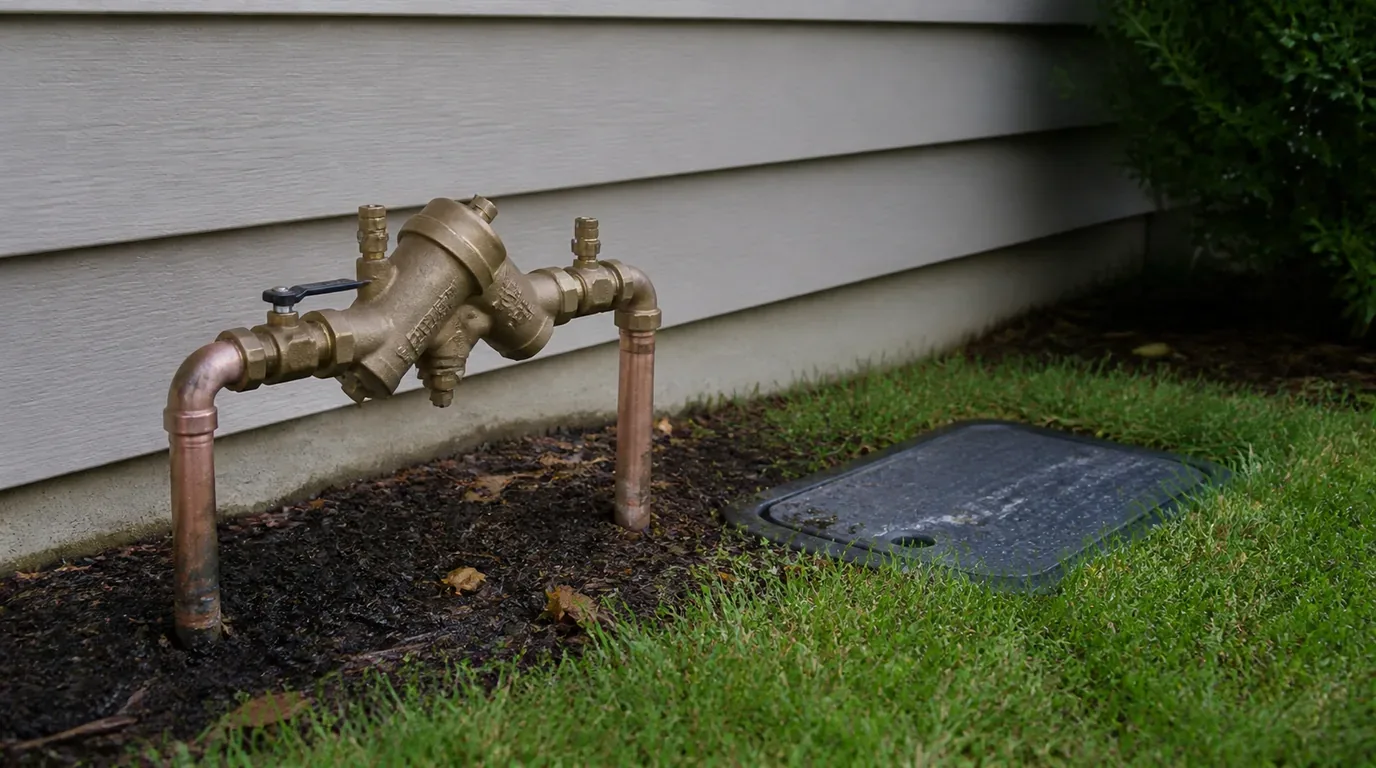
Backflow is water flowing the wrong way. If pressure in the city main drops, water from an irrigation system, a pond or a boiler can be drawn back into the drinking supply. An assembly prevents that.
Fertilizer, pesticides and standing water can all be in a sprinkler line. The assembly is the barrier between them and the tap.
Homes usually have one of three devices: a pressure vacuum breaker, a double check assembly or a reduced pressure zone unit. The level of hazard and the local code decide which is required.
A pressure vacuum breaker sits above ground and is common on residential sprinklers. Reduced pressure assemblies are used where the hazard is higher.
Many owners book the annual test in spring, when the sprinkler is started for the year. Fall blowouts and winterization protect the assembly.
The city bases requirements on site hazards, so a home with a pond, a well or a separate irrigation service may have different needs. Ask the city's program if you are unsure.
A yearly test is quick and ordinary, and repairs depend on the fault. Keep these points in mind.
Ask whether the price includes filing the test report.
Westminster says assemblies must be tested when installed and every year afterward by a certified backflow tester. Results are reported to the city's cross-connection control team, and the city accepts online submission through a third-party site.
If an assembly fails, it is repaired or replaced and tested again. Keep the test report and the date of the next test.
Irrigation assemblies should be drained before the first hard freeze. A pressure vacuum breaker left full can crack, which is a common cause of a spring leak.
In spring, open the valves slowly and check for leaks. Ask for a test after the system is turned on.
Write the test date and the result on a tag or in a file. Keep the report for the next visit, because it shows the assembly's history.
If you sell, include the latest report in the disclosure packet.
After a test, the certified tester files a report with the water provider, and you should keep a copy. If a test fails, the report lists the problem so the repair can be quoted and retested quickly.
Mark the test due date on a calendar. Utilities usually send reminders, but a missed notice does not cancel the requirement, and a late test can lead to follow-up letters or a shutoff notice.
Trace a hidden leak behind a wall, under a slab or along the buried line before any wall has to be opened.
Plumbing help for shops, offices, apartment buildings and restaurants.
Thaw an iced-up line safely, inspect it for splits and reroute or insulate the run that keeps freezing.
The city requires an approved assembly based on hazard and tests at installation and annually. Ask the cross-connection program about your service.
A certified backflow prevention assembly tester. Ask for proof of certification.
The city says results go to its cross-connection control team and can be submitted online.
A worn seal, a cracked body from a freeze or a stuck relief port. Shut off the supply and call for repair.
Calls are taken at every hour. Annual tests tend to be booked for daytime, but an assembly that spits water or fails should be reported promptly. The dispatcher can explain timing.
Call and say what kind of assembly you have. A contractor can schedule the test and the report.
Service area centered on Westminster and the nearby Denver north-metro cities.